
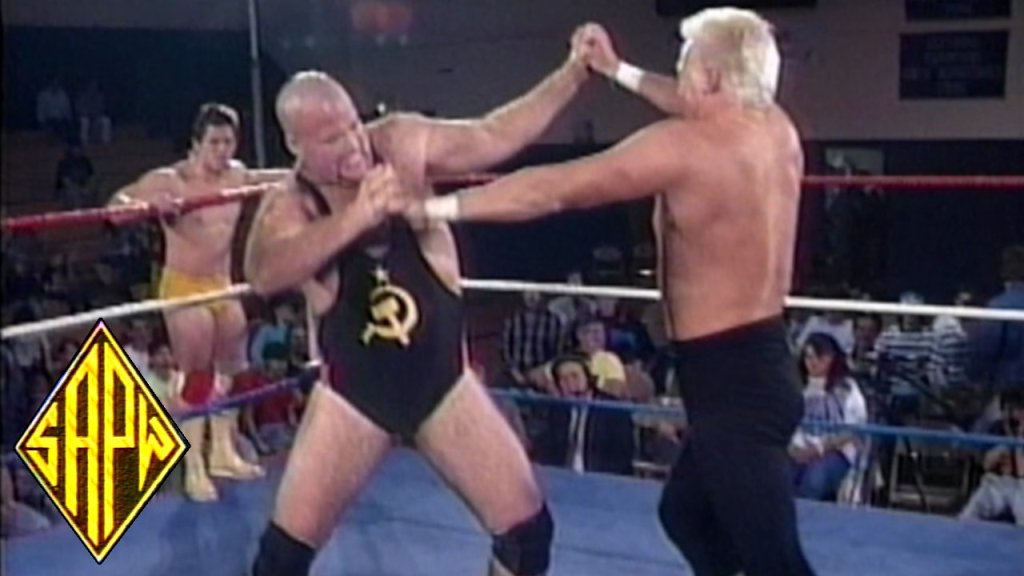
In the shifting landscape of professional wrestling during the early 1990s, South Atlantic Pro Wrestling (SAPW)—originally founded as the North American Wrestling Association—emerged as a bold, nostalgic effort to restore the legacy of the National Wrestling Alliance’s (NWA) Mid-Atlantic territory. Based in Charlotte, North Carolina, SAPW was launched in January 1990 by George Scott, John Ringley, and Mike Lamberth, all veterans of Jim Crockett Promotions (JCP). It was a venture driven by tradition, but ultimately undermined by financial instability and the evolving tastes of wrestling fans.
Foundation and Ambition
SAPW held its first television taping in Sumter, South Carolina, on February 8, 1990, and began airing matches in the spring. By June of that year, it had crowned its inaugural champions: Robert Fuller became the first North American Heavyweight Champion after defeating Ricky Steamboat in an 18-man tournament, while The Nasty Boys claimed the North American Tag Team titles in Winston-Salem, North Carolina.
The promotion’s leadership, particularly Scott and Ringley, understood the critical role of television in pro wrestling’s success. They acquired JCP’s former broadcast slots across the Carolinas, securing key media markets and establishing regular shows in long-standing Mid-Atlantic venues such as the Columbia Township Auditorium and the Winston-Salem Memorial Coliseum.
A Regional Revival
SAPW aimed to resurrect the spirit of the NWA’s traditional Mid-Atlantic territory, encompassing Virginia, North Carolina, and South Carolina. It also expanded into Georgia, Mississippi, and beyond through a mix of arena shows, high school gyms, community centers, and state fairs. Notably, in August 1991, SAPW hosted a benefit event in Wentworth, North Carolina, for Operation Family Shield, a program aiding military families during the Persian Gulf War.
In mid-1990, Paul Jones and Frank Dusek assumed control of SAPW and secured a deal to broadcast its television program on the America One Network. This marked a new chapter in the promotion’s trajectory, but also hinted at underlying struggles for direction and financial backing.
Veteran Presence and Emerging Stars
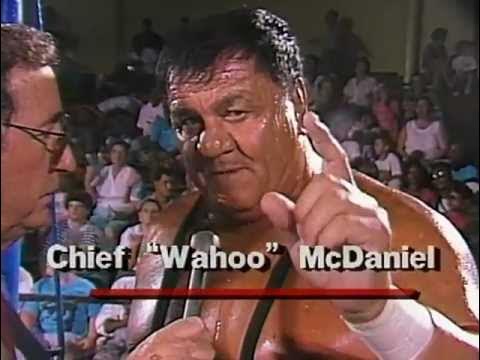
SAPW’s roster was a blend of wrestling veterans and rising talent. Familiar names from the Mid-Atlantic era—Big John Studd, Junkyard Dog, Wahoo McDaniel, and Ricky Steamboat—lent credibility and star power. The promotion also featured legends such as Lou Thesz and Johnny Weaver in commentator roles, along with iconic announcer Bob Caudle joining late in 1991.
At the same time, SAPW became a proving ground for up-and-comers. Wrestlers like Curtis Thompson, Dean Malenko, Rob Van Dam, Vince Torelli (later known as Ken Shamrock), and Nelson Frazier (later Mabel/Viscera in WWE) were among the younger names to pass through SAPW rings. Chris Chavis—later known as Tatanka in the WWF—stood out as SAPW’s first breakout star. Mentored by Steamboat and McDaniel, Chavis earned critical acclaim, including third runner-up for Rookie of the Year in Pro Wrestling Illustrated.
Wrestling Philosophy and Internal Turmoil
SAPW positioned itself as a purist alternative to the flashier “sports entertainment” style of the World Wrestling Federation (WWF). Its “family friendly” product emphasized traditional Southern wrestling values, appealing to fans nostalgic for the Mid-Atlantic territory’s golden era.
However, the promotion was not without controversy. One notorious incident involved a drunken altercation between Ken Shamrock and The Nasty Boys that ended with Shamrock hospitalized—suffering a broken sternum and caved-in eye socket. According to Frank Dusek, the situation nearly escalated to tragic levels before other wrestlers intervened.
Cross-Promotional Experimentation
In a brief but controversial partnership, SAPW aligned with Puerto Rico’s World Wrestling Council (WWC) in late 1991. When booker Manny Fernandez took the SAPW Heavyweight Championship to WWC and began defending it as the “WWC North America Champion,” SAPW publicly suspended him, highlighting tensions within the organization’s creative direction.

Decline and Closure
Despite a promising start, SAPW was plagued by financial losses from the beginning. George Scott reportedly lost $600,000 in the first six months before stepping away and retiring to Florida. The departure of its founding leadership and talent resulted in a noticeable decline in product quality. Ratings never rebounded, with the show relegated to a “Friday night death slot” for much of its run.
Eventually, Paul Jones and Frank Dusek sold the struggling promotion to North Carolina promoter Greg Price, who managed SAPW during its final year. The last official show took place in Cerro Gordo, North Carolina, on August 1, 1992.
Legacy of SAPW
Though short-lived, South Atlantic Pro Wrestling represents a unique chapter in wrestling history—an ambitious homage to the Mid-Atlantic territory’s storied past. While its attempts to restore regional wrestling under the NWA banner fell short, SAPW briefly rekindled the spirit of a bygone era and gave several future stars their first big break in professional wrestling. In many ways, it was the last stand of old-school territorial wrestling, standing defiantly in the shadow of a rapidly globalizing industry.
You can follow Pro Wrestling Wire on X at @pwwire and on Facebook at The Pro Wrestling Wire. You can follow Rick Del Santo on X at @TheRickDelSanto
 THE PRO WRESTLING WIRE